
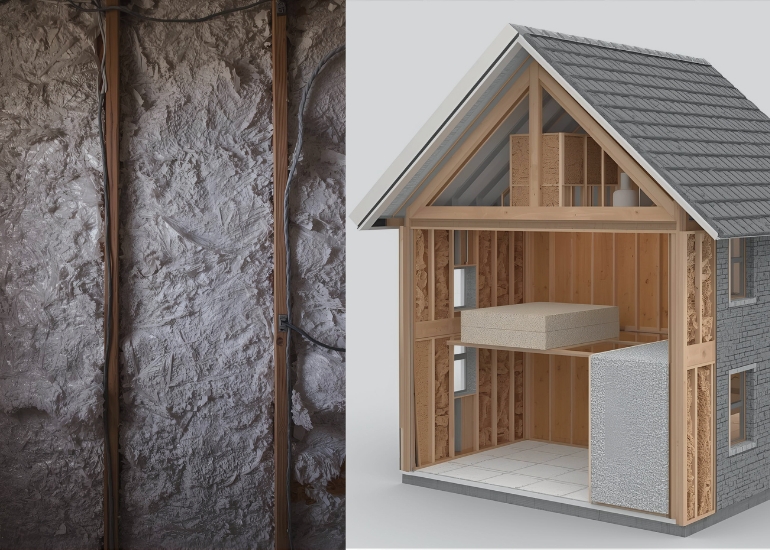
Types of Insulation Covered Under ECO4 Grants
Are you tired of watching your energy bills rise while your home still feels cold and draughty? What if you could keep your home warmer, lower your bills, and even boost your property’s value — all with government support? That’s exactly what the ECO4 Insulation Grant UK offers.
Backed by the UK government, the Energy Company Obligation (ECO4) scheme helps households across the country upgrade their homes with free insulation measures. Whether you live in a cozy terraced house or a large detached property, ECO4 aims to make your home more energy-efficient by targeting one of the biggest culprits of heat loss — poor insulation.
In this guide, we’ll break down the main types of insulation covered under the ECO4 scheme, how each one works, and why upgrading your home’s insulation could be one of the smartest decisions you’ll ever make.
Smart Heating
Efficient temperature control system
Insulation Upgrade
Reduces heat loss effectively
What is the ECO4 scheme?
The ECO4 scheme (Energy Company Obligation – Phase 4) is a government insulation grants scheme with an obligation in 2026 on major energy suppliers to deliver energy efficiency measures to homes in the UK.
Key points:
- The scheme runs from April 2022 to March 2026.
- Its focus is on improving homes with low energy efficiency (for example homes with an Energy Performance Certificate rated D, E, F or G) and on households that are low income or vulnerable.
- Insulation plays a central role: many of the grants are for insulation works before other heating upgrades. Insulation is one of the most cost-effective ways to reduce heat loss, improve comfort and cut bills.
- Understanding this scheme helps when you consider what insulation you can install and how to qualify.
Types of insulation covered under ECO4
Below are the insulation types for UK homes eligible under ECO4.
1. Loft insulation ECO4 grant
This is one of the simplest and most common insulation upgrades. It covers:
- Installing insulation between and/or over joists in the loft/attic space.
- “Room-in-roof” insulation (loft conversions, attic rooms) where the sloped ceilings or walls need insulation.
- Flat roof top-ups may sometimes be eligible (depending on property type).
Benefits:
- Relatively quick and low-disruption compared to wall insulation.
- Immediate comfort improvements (warmer upstairs, less draught).
2. Cavity wall insulation grant
This involves filling the gap (cavity) between the two layers of brick (inner and outer leaf) in walls of many UK homes built after the 1920s. The ECO4 scheme covers this where the property is suitable.
Benefits:
- Significant reduction in heat loss (for suitable properties) – sometimes up to 35%.
- Cost-effective and often quick.
3. Solid wall insulation ECO4
Solid wall insulation is for properties that have solid walls (often older homes built before the cavity wall era). It can be done:
- On the external face of the wall (External Wall Insulation – EWI), adding insulation and finishing with render or cladding. The external wall insulation ECO4 scheme is a key housing improvement measure funded by the insulation scheme.
- On the internal face (Internal Wall Insulation grant – IWIG), adding insulation boards and finishing inside.
Benefits:
- Reduces heat loss significantly (up to 45%, particularly in older homes) for eligible properties.
- Also improves aesthetics and comfort (especially external insulation, which gives a “refurbished” look).
4. Room-in-roof / attic conversion insulation
Room-in-roof insulation is designed for homes with loft conversions or attic rooms. For homes where a loft has been converted into a room (i.e., “room in roof”), the insulation required is slightly different because of sloped ceilings, dormers etc. Under the ECO4 scheme this is eligible.
Benefits:
- Improves comfort of the converted space; prevents heat loss through the roof/ceiling.
- Makes existing attic rooms genuinely energy efficient.
5. Under-floor insulation grant
This type of insulation is less commonly publicized but is covered under ECO4 in suitable homes. Under-floor insulation grant can reduce heat loss (especially in homes with suspended floors) and can be significant.
Benefits:
- Reduces cold floors and draughts from beneath the house.
- Improves overall thermal comfort and may help with condensation underfloor.
To qualify for the ECO4 scheme insulation eligibility, you must meet specific criteria.
1. Households with Low Income
Should your household income be below a specified threshold, you might be eligible for this grant. This comprises individuals who get benefits.
2. Weak Energy Efficiency Ratings
If your home has an EPC rating of D, E, F, or G, you might qualify for free insulation through ECO4.
3. Gas delivery
Your residence should either have a gas connection or you should be open to having one installed.
4. Type of House
- Homes with solid walls, where cavity Wall insulation is not feasible, are primarily offered internal wall insulation.
- Older properties, particularly those constructed before the 1920s, have a higher likelihood of being eligible.
5. Qualifying benefits
Universal Credit, income-based Jobseeker’s Allowance (JSA), income-related Employment and Support Allowance (ESA), Income Support, Working Tax Credit, Child Tax Credit, Housing Benefit, and Pension Credit (Guarantee or Savings).
Home insulation works by keeping the heat in your home and stopping outside cool air from entering. It’s akin to using a thermal blanket that envelops your home, acting as a barrier that stops heat from passing through easily, thus eliminating the constant need for heating.
Most insulation materials, including fiberglass, foam, and wool, trap small air pockets that help reduce heat loss through a home’s walls, roofs, and floors.
How much can you save with free home insulation energy savings?
In a solid-wall house that is uninsulated, heat losses are recorded as high as 25% through the roof and as high as 45% through the walls. With various types of insulation in walls, floors, and lofts, homes can lower energy bills by up to £730 annually and reduce emissions by up to 1.7 tonnes per year through energy-efficient home insulation with the help of heat1.
Assessment and Survey of Home
If you fulfill the criteria, we will contact you to arrange a complimentary home survey. While we’re visiting, we’ll examine your house, assess the type of insulation required, and suggest optimal energy-saving methods.
Application Form
To begin the process of checking eligibilty, go to heat1 website and fill out the online application form.
Setup and Enhancements
As soon as you receive insulation grant approval, heat1 certified installers will complete the insulation work swiftly and professionally. This will improve your home’s warmth, energy efficiency, and environmental friendliness, and because of government funding, it will be free for you.
Following these steps can improve your home insulation and possibly lower heating costs with the help of heat1.
With heat1, you can start today to check your eligibility for the ECO4 scheme. From checking your EPC to assemble everything, we will handle it all, ensuring you have no concerns.
The energy efficient home insulation grant in the UK can help you insulate your loft or cavity, solid wall at no charge. Submit your application now and start to save on your energy costs. For more details about the type of insulation, you can get information from our website, heat1.co.uk.